UK fusion strategy 2026
Summary
The government sets out a £2.5bn fusion strategy over five years, primarily funding STEP prototype plant development at West Burton and R&D facilities. The strategy aims to develop UK fusion industrial capability through UKAEA Group restructuring and private sector partnerships. Most funding flows to construction and engineering contracts rather than direct energy market interventions.
Why it matters
Redistributive industrial policy that treats long-term energy supply symptoms rather than current market structure. Creates potential future generation capacity but with no immediate effect on electricity costs, charges, or grid operations.
Key facts
- •£2.5bn total funding 2025-2030
- •£1.3bn for STEP prototype at West Burton
- •£180m for LIBRTI tritium breeding facility
- •Draft National Policy Statement (EN-8) by summer 2026
- •8,000 construction jobs at peak in 2030s
- •UKIFS renamed to UK Fusion Energy
Areas affected
Related programmes
Memo10,000 words
This publication sets out the UK government’s strategy for developing fusion energy. It outlines our plan to accelerate fusion research, technology development, and commercialisation. We will achieve this by strengthening supply chains, building the skills needed for the fusion industry, and supporting investment. The document is intended for anyone who wants to understand the government’s plans and approach to making fusion a reliable, commercially viable source of low‑carbon energy, while maximising its potential for both near and long-term economic growth and jobs. --- ## Foreword Economic growth is the central mission of this government. The UK’s modern Industrial Strategy sets out a bold and credible plan to unlock long-term investment, drive productivity and grow the industries that will underpin sustained economic growth into the future. As a priority sub-sector in the ‘Clean Energy Sector Plan’, fusion energy is one of those industries. The UK’s position as a leader in fusion energy R&D is something we should be proud of. In 2021, the UK was the first country in the world to publish a fusion energy strategy, building on the R&D excellence of over 60 years at Culham in Oxfordshire and setting out a pathway to commercialisation. Since then, we have seen rapid progress and growing private sector involvement, reinforcing the UK’s position as a global leader in fusion innovation. Today, the UK is backing fusion research and commercialisation with over £2.5 billion over 5 years as part of the UK’s Plan for Change. Culham Campus is already driving economic growth and capability throughout the Oxford-Cambridge Growth Corridor and right across the country. We are seeing private companies in the UK raise capital, generate revenue, and apply fusion-derived technologies across sectors. We are developing the STEP site at West Burton in Nottinghamshire which will bring thousands of jobs and industrial renewal to the site of a former coal power station. But the landscape continues to evolve. Other countries have published their own strategies with significant investment into fusion from China, Germany, Japan and the US. The challenge has shifted from research excellence to industrial leadership, through growing and supporting an ecosystem of SMEs; developing strong supply chains; and delivering a commercially viable fusion plant. The UK is ready to lead this next phase, building a thriving fusion industry from supply chains to developers, creating a skilled workforce, supporting commercialisation and deployment, and catalysing demand through the UK’s STEP programme. We are committed to making the UK the best place in the world to develop and deploy fusion energy. The UK has historically excelled in R&D capability but has not always capitalised its opportunities by turning a technical advantage into a commercial advantage. Fusion cannot be the next in a line of missed opportunities. It is a sector where the UK leads today and can capitalise on tomorrow. It will help us capture a greater share of foreign direct investment, support high-quality job creation, and strengthen our energy resilience. It is already catalysing investment, creating high-quality jobs, and driving innovation across the country. Fusion is a launchpad for more UK-based advanced manufacturing, greater sovereign engineering excellence, and global leadership in clean energy. It is a growth story rooted in British ingenuity, industrial ambition, and international leadership, and it is a story we are proud to support. This strategy, led by the Department for Energy Security and Net Zero and supported across government, sets out how we will go further, taking decisions for long-term prosperity while delivering tangible benefits now: creating thousands of jobs, attracting new companies and capabilities, while turning the promise of fusion into reality. A reality not just enabled through commercialisation but through innovation, deployment and market creation. There is evidently a big job to do, requiring collaboration and commitment across government, industry, and academia. Such an undertaking with all its technical and commercial uncertainties will not be without setbacks. Those pursuing and supporting fusion, whether across government or in the private sector, should be bold and not fear these challenges but recognise that they are steps on a journey to a new industrial and energy revolution. And, like every major revolution before it, this will bring not only end-goal benefits but a wave of enabling technologies in its wake that reshape industries and societies. We are delighted that through this strategy, the pathway for achieving this is not only possible but clear and actionable. Lord Vallance of Balham, Minister of State for Science, Innovation, Research and Nuclear Lord Livermore, Financial Secretary to the Treasury ## Executive summary The UK is a global leader in fusion energy, built on decades of experience, with unique technological capabilities and a growing fusion sector positioning the UK to capture significant opportunities for economic growth. No other country in the world combines the UK’s depth of public research, strategic approach to R&D priorities, scale of government investment, and commitment to first-of-a-kind deployment. That is why fusion is a frontier industry within our Industrial Strategy and is central to delivering its objectives of higher business investment, stronger supply chains, and good jobs across the UK. With timescales for fusion deployment shortening and investment around the world accelerating, this strategy sets out a clear plan for how the UK will continue to build an industry to remain at the cutting edge of fusion development, support investment and skills, and establish a world-leading policy framework with STEP[[footnote 1]](#fn:1) at the heart of our approach. The UK’s Fusion Energy Objective Accelerate growth of the UK fusion industry to capture the economic and strategic benefits of fusion through a globally competitive supply chain; UK based power plant design, subsystems and systems integration capabilities; and demonstrating commercial viability through STEP. We will do this in partnership with the private sector and will ensure that the UK is well positioned to capture the near-term economic benefits of rapidly developing fusion technology such as innovation, creation of secure, well-paid jobs, and the use of commercially valuable new fusion technology in adjacent sectors. We will position the UK capture the significant long-term economic and energy security benefits from a global market expected to be worth between £3tn and £12tn in the future. That is why the UK has announced record breaking funding of over £2.5bn for fusion over 5 years. The UK’s public sector fusion capability is underpinned by the world leading expertise of the UK Atomic Energy Authority (UKAEA) Group which comprises of: UKAEA National Fusion Laboratory[[footnote 2]](#fn:2) – the largest dedicated fusion organisation in the world with decades of expertise through the operation of JET[[footnote 3]](#fn:3) and a comprehensive suite of world-class facilities covering materials, robotics, plasma and tritium handling. Supported by £1.2bn of fusion funding, this strategy sets out how we will continue to leverage the leadership of UKAEA to coordinate R&D priorities and accelerate towards fusion commercialisation and UK global competitiveness. UK Industrial Fusion Solutions (to become UK Fusion Energy) – UKIFS has been set up initially to deliver the STEP programme. Backed by £1.3bn of government investment, UKIFS is uniquely placed as one of the best capitalised fusion companies in the world, with genuinely leading technical capabilities, the backing of UKAEA’s scientific expertise and the ability to call upon the coordinating power of government. It will provide the foundation for the UK to develop first of a kind fusion power plants and directly stimulate the growth of the UK supply chain. Working with industrial partners, UKIFS will develop world leading capabilities as a fusion power plant integrator that can design and deploy fusion power plants globally, with the capability to raise external investment in future. To recognise this ambitious role and its future in the UK fusion energy sector, as part of this strategy we are announcing that we will rename UKIFS as UK Fusion Energy. ## Key measures #### Accelerate R&D We will invest in the underpinning research and technology needed to solve remaining technical challenges. This includes: * Turbocharging the UKAEA’s status as a world-class centre of fusion R&D, reinforcing its position as a hub for high-tech innovation. This includes investment in unique fusion R&D capabilities such as £180m for tritium breeding through LIBRTI[[footnote 4]](#fn:4);new international partnerships such as the UKAEA’s new H3AT[[footnote 5]](#fn:5) tritium facility working with Eni (Italy) and Kinectrics (Canada); and groundbreaking decommissioning of JET[[footnote 6]](#fn:6); * Partnering with industry to develop leading technologies such as magnet and gyrotron (microwave) test facilities at West Burton, using the focus provided by STEP and building on decades of world leading research; * Investing £45m in the new ‘Sunrise’ 1.4 MW supercomputer, the largest fusion-dedicated AI supercomputer in the world, which will use advanced AI to accelerate fusion design, modelling, and operations; and developing a wider AI Growth Zone to power jobs and economic growth. #### Grow investment, supply chains and skills Use public investment, including through STEP, to unlock private sector investment and stimulate a rich ecosystem of companies working in fusion, from SMEs to multinationals, supported by a pipeline of talent and skills, making the UK a top global destination for private developers, suppliers and investment. This includes: * A major new phase for STEP backed by £1.3bn, bringing significant economic benefits to the region around the STEP site at West Burton, including thousands of new jobs. This includes the appointment of industrial partners, purchase of the West Burton site, and plans to develop UK Fusion Energy (previously UKIFS) as a pioneering UK systems integrator, partnering with the private sector to develop critical capabilities. * A UK Fusion Investment Prospectus setting out the offer for global fusion companies and investors wanting to participate in the UK’s world-class fusion ecosystem. * Supporting fusion skills development including the UKAEA’s Fusion Opportunities in Skills, Training, Education and Research (FOSTER) programme, aiming to bring over 2000 newly trained individuals into the sector. In addition, working with the Nuclear Skills Taskforce and Department for Education to safeguard the fusion skills pipeline in the long term. * Unlocking the UK Public Finance Institutions such as the British Business Bank and National Wealth Fund to back British businesses and support investment into the fusion sector and supply chain. We will also explore regional incentives to attract more fusion investment to support the East Midlands fusion cluster building on the government’s cornerstone investment into Starmaker One, a UK fusion investment fund. #### Policy innovation Create a forward-leaning environment for the fusion sector to thrive, further developing the UK’s pro-innovation regulatory regime, streamlined planning, and developing the world’s first market framework for fusion energy. This includes: * Publishing a draft National Policy Statement for Fusion (EN-8) in Summer 2026 to simplify the planning regime for fusion companies locating in the UK and publish a roadmap setting out regulatory processes for developers. * Developing a plan for the UK to be the first country in the world to offer a market framework for fusion energy. By working with the fusion and energy sectors, consumer groups and other stakeholders we will provide providing leading incentives to site fusion facilities in the UK while balancing the need to protect future bill payers. * Engage the energy insurance market to encourage proportionate insurance of fusion outside of the nuclear pools and standard nuclear exclusion clauses. Alongside this, we will continue to work with trusted partners around the world, including through our fusion agreements with Canada, Germany, Japan, the US and others as agreed, welcoming the benefits of collaboration as a key part of our approach. We will continue to promote a proportionate approach to regulation through multilateral fora such as the G7 and International Atomic Energy Agency (IAEA) and explore working with other multilateral organisations such as the International Energy Agency (IEA) and G20 where relevant to take a globally coordinated approach to fusion commercialisation. With the action set out in this strategy and continued focus on commercialisation of fusion technology for both short and long-term economic gain, the UK is ready to play a leading role in the global fusion market. ## The government’s vision for fusion energy Accelerate growth of the UK fusion industry to capture the economic and strategic benefits of fusion through a globally competitive supply chain; UK based power plant design, subsystems and systems integration capabilities; and demonstrating commercial viability through STEP. ### Introduction The UK has exceptional R&D capabilities in fusion, which are already translating into UK economic growth. Since the publication of the UK’s first fusion strategy in 2021 the UK sector has developed substantially. We have expanded R&D capability, holistically addressing remaining technical challenges through world-leading facilities across plasma, robotics, materials and unique new capabilities like H3AT and LIBRTI, whilst demonstrating fusion decommissioning through JET. We have created STEP, the UK’s flagship programme which will demonstrate a fully integrated fusion power plant and catalyse the wider sector. This is being achieved in partnership with the private sector, with over 500 companies already involved in the UK fusion sector and more choosing to locate activities in the UK to benefit from this ecosystem.[[footnote 7]](#fn:7) However, with global investment accelerating, timescales narrowing and the future global fusion market estimated to be worth between £3tn and £12tn in future, both the opportunity and competition are increasing rapidly.[[footnote 8]](#fn:8) This strategy sets out the UK’s vision and plan to turn this foundation into real and enduring economic, commercial and strategic value for the UK, now and in the future. We will use over £2.5bn of government investment, including through STEP and wider programmes, to stimulate a rich ecosystem of fusion related companies, from SMEs to multinationals, fusion developers to strong supply chains, making the UK a top global destination for investment. This sector will have the flexibility, capacity and capability to serve a future global fusion market, whatever the future mix of technologies. We will create demand by providing commercial and procurement opportunities for UK companies and making it cheaper and easier for fusion developers and others to operate in the UK. And we will support the supply of technology by turbocharging our world class R&D base with further investment and new facilities, supporting acceleration of commercialisation, investment and tech transfer in both the public and private sectors. By stimulating both supply and demand, we aim to support a long-term cycle of growth that will help anchor fusion companies and supply chains in the UK. As well as using STEP as a supply chain stimulus and demonstration for fusion technologies, we will develop UK Fusion Energy as a pioneering UK company with systems integration and subsystems capability, partnering with the private sector and able to raise external investment in future. ### Development stages We envisage the UK fusion sector developing in 3 broad stages, each advancing the UK’s fusion programme and industry development in different ways and requiring different types of support from government and private investment. These stages are: * R&D and near-term technology commercialisation * Fusion demonstration and deployment * A UK and global fusion energy market These are not simply sequential – they overlap and work on the later stages is already underway. Precise timings will be driven by emerging technology and the fusion market. However, the UK needs to be ready to support each of these stages. To do this and deliver the UK’s objective this strategy sets out 3 delivery themes: * Accelerating R&D * Growing investment, supply chains and skills * Policy Innovation These are summarised in Figure 1. Annex A sets out an overview for how the UK fusion programme fits together and contributes to our objective of fusion sector growth. Figure 1 – a representation of how the UK’s fusion programme contributes to the UK’s fusion objective. 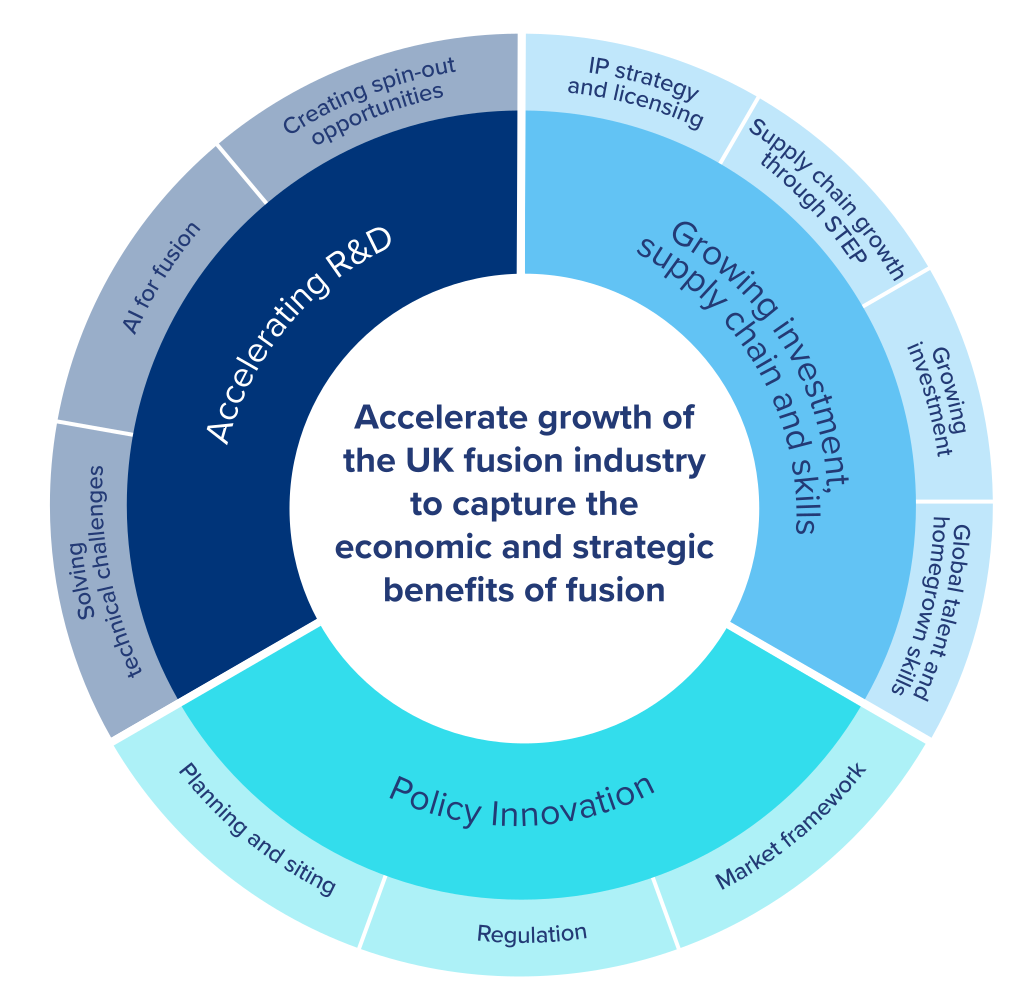 --- Description of figure 1: Donut chart illustrating the 3 delivery themes of the strategy and the objective to accelerate growth of UK fusion industry for economic and strategic benefits. The objective of the strategy is in the centre of the donut. The inside ring of the donut has 3 segments; Accelerating R&D, Growing investment, supply chain and skills, and Policy Innovation. These are each divided into sub-segments for the outer layer of the donut, illustrating specific initiatives such as AI for fusion, supply chain growth through STEP, and planning and siting. --- #### R&D and Commercialisation In the near term, we expect the UK fusion sector, including UKAEA Group and increasing numbers of private companies, to make significant strides towards delivery and the commercial exploitation of fusion technology for both fusion and adjacent markets. For example, we expect UKAEA and wider UK R&D to deliver key advances in plasma science, robotics, materials testing and tritium handling, and UK Fusion Energy will deliver core technical milestones for STEP. We will also see development of new UKAEA R&D capabilities in fusion fuel breeding, material testing and high-performance computing all of which are required for fusion commercialisation.[[footnote 9]](#fn:9) Fusion companies are already producing spillover benefits from technology exploitation, providing near-term benefits from taxpayer and private sector investment. Private companies globally are also aiming to hit significant milestones demonstrating the key goal of net gain of energy and progressing their paths to deployment. The combination of credible technical progress and near-term commercial opportunities is also starting to attract larger industrial players necessary for deployment, building industrial capability and resilience. Government investment into UKAEA Group, including STEP, will be a key enabler in this stage, encouraging engagement beyond the immediate supply chain. There are specific opportunities for companies in high temperature superconducting (HTS) magnets; advanced materials; robotics; neutral beams; microwaves & gyrotrons, lasers; plasma processing; and AI for complex dynamic systems. Adjacent applications for these are meanwhile being developed in sectors such as advanced manufacturing, aerospace, automotive, defence, energy systems, medical technology, space and telecoms. For example, the UK company Tokamak Energy has established a magnets division which is already exploring the application of HTS magnet technology to other Industrial Strategy frontier and foundational industries in addition to fusion, such as electricity networks, advanced materials, automotive, aerospace and MedTech. #### Demonstration and deployment As fusion technologies mature, we expect to see more development of integrated fusion systems, in the UK and worldwide. In partnership with the private sector, we will develop UK Fusion Energy as a national champion and systems integrator, underpinned by market leading sub-systems and technology provided by the wider UK sector. Delivering on our Clean Energy Industries Sector Plan, we will back UK based industry and anchor a significant portion of the high-value supply chain in the UK, creating an industrial base used globally to provide major fusion components and systems integration. This requires focus on the systems and capabilities that the UK will lead in and greater detail on how we will continue to commercially exploit these capabilities to capture economic value. For example, UK Fusion Energy will partner with UK industry, providing commercial opportunities for companies whilst driving development of a complete fusion plant. Those companies will develop their own capabilities to meet the needs of STEP and also provide wider commercial opportunities. Amongst the areas we expect to benefit from this approach are: high temperature superconducting (HTS) magnets where STEP will provide an incentive for UK based suppliers to scale production and integrate components into full fusion-ready systems; and Gyrotrons where there will be a need for the UK supply chain to grow and move from component level expertise to full fusion product delivery. UK Fusion Energy itself will develop the capability to bring together fusion systems into an integrated power plant design, which can be commercially exploited. In this way, public sector expertise will be commercialised in partnership with industry to help develop the UK supply chain. This will be valuable not only for STEP itself but will create a vibrant ecosystem for fusion and adjacent companies, providing an attractive destination for wider companies and investors to come and be a part of. There are also capabilities that already exist within UKAEA and its partners that are ready for commercialisation, either by spinning out that capability or partnering more closely with industry. Areas of focus here will include: * neutral beam systems * remote maintenance and robotics * diagnostics and sensors * fusion fuel cycle systems * fusion hardened components and materials * key materials supply * target and laser-based technology from STFC[[footnote 10]](#fn:10) and its partners This approach combines public sector and UK industry capability with STEP demand to develop and anchor a UK based supply chain that can service not just STEP but a growing global market. #### A UK and global fusion market ##### Uses of fusion Even without factoring in the growing needs of AI, global energy demand is expected to roughly double by 2050 and continue to grow onwards.[[footnote 11]](#fn:11) AI will only add to that demand. Fusion energy’s unique characteristics – clean, abundant, reliable, and safe – make it well-suited to power not just homes and businesses, but also energy-intensive sectors such as industry and data infrastructure. This gives it the potential to be a valuable addition to the UK’s future energy mix alongside other clean energy sources. The government is already planning for when fusion energy begins to be deployed globally, generating huge economic opportunities for the UK as an exporter of technology and making a significant contribution to meeting future global energy needs. At the same time, the UK will be demonstrating deployment in the UK itself, with fusion having the potential to significantly strengthen UK energy security alongside other sources. To prepare for this and make it easier to deploy fusion facilities in the UK, we outline a range of policy measures later in this strategy, including in regulation, planning and market frameworks that will strengthen domestic fusion capability. Figure 2 – Infographic illustrating the wider technology and energy uses of fusion 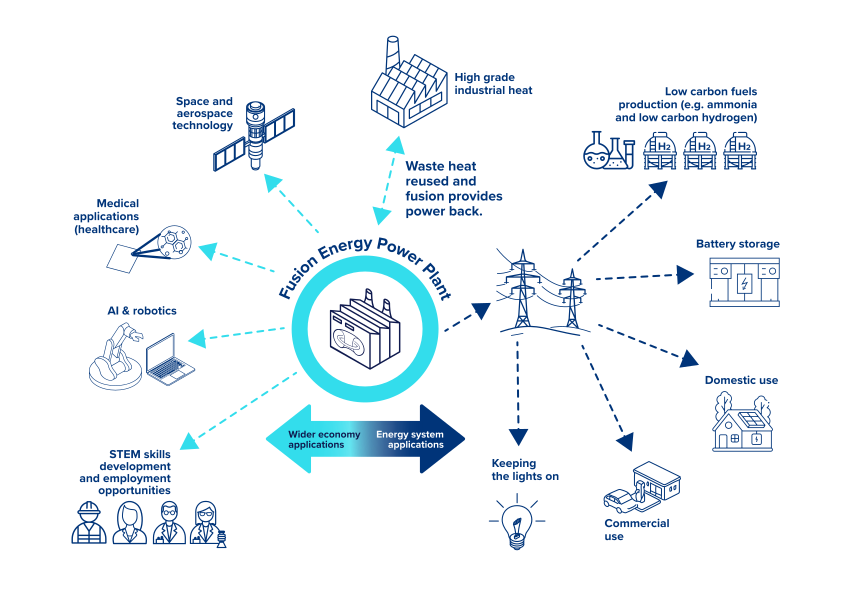 --- Description of figure 2: Diagram illustrating fusion energy applications. Key elements include power plant at the centre of application centre, with arrows to the left illustrating wider application such as medical applications, AI and robotics, and high grade industrial hear. Arrows to the right illustrate energy systems applications such as domestic use, battery storage, and commercial use. --- ##### Collaborating across the UK Decisions about deployment of fusion energy are matters for the different nations of the UK. However, Wales, Scotland and Northern Ireland have significant skills and supply chain expertise that can benefit the UK fusion industry overall. The UK government will work with the devolved governments to ensure that all nations across the UK can benefit from the opportunities of fusion. ##### Our approach to international collaboration International collaboration is a key part of accelerating fusion commercialisation and providing both supply side capabilities and demand for fusion technology. The international fusion landscape has shifted markedly in recent years. However, amidst increasing global competition, strategic partnerships continue to have a crucial role in accelerating commercialisation by collaborating on expertise, facilities and derisking R&D development. Through Fusion Futures and research collaborations, the UK will manage its international relationships to accelerate progress for the UK and our trusted partners, positioning the UK to capitalise as fusion moves from the laboratory towards deployment. Figure 3 – Summary of UK fusion collaborations 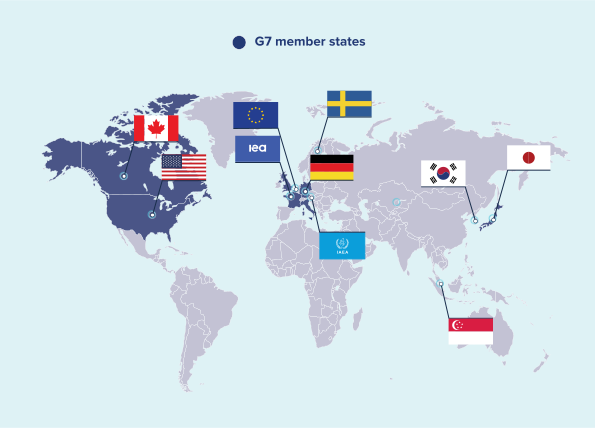 --- Description of figure 3: A world map showing the UK’s global fusion collaborators, which include Canada, the EU, Germany, the G7, the IAEA, the IEA, Japan, RoK, Sweden, Singapore, and USA. --- The UK’s global fusion collaborations include: * Canada: MoU (Feb 2024) * EU: UK hosted JET and remains open to collaboration with EU and ITER * Germany: Joint Declaration of Intent (2024), strengthened via Friendship and Bilateral Treaty (July 2025) * G7: UK active in Fusion Energy Working Group and wider G7 activities * IAEA: UK active in World Fusion Energy Group, Fusion Energy Conference, and work to develop international safety standards * IEA: UK active in fusion Technology Collaboration Programmes * Japan: Memorandum of Cooperation (July 2025) * RoK: Global Strategic Partnership and MoU (Nov 2023) * Sweden: Strategic Partnership (Oct 2023) and MoU (Oct 2025) * Singapore: Strategic Partnership (Sept 2023) * USA: Strategic Partnership (Nov 2023), strengthened via Technology Prosperity Deal (Sept 2025), plus LEAPS project with Tokamak Energy We will also continue to work through multilateral groups such as the G7 and IAEA. More countries are now implementing regulatory frameworks, demonstrating a sizeable shift in the global approach to fusion commercialisation. While the establishment of these fora are a positive signal for the credibility of fusion development, they cannot be a place of talk and no action. Without international regulatory harmonisation, the fusion sector risks inconsistent regulation and policies that will be to the detriment of all countries. The IAEA and G7 have the opportunity and platform to shape the landscape of fusion, and the UK will continue to push for regulatory simplification and harmonisation to facilitate global deployment of fusion energy on private sector timescales. ## The UK’s plan for commercial fusion deployment Achieving our vision for fusion will require sustained effort from government, industry and public sector bodies with each playing a role to solving the barriers to fusion energy. We will do this through: Accelerating R&D: * Investing in the underpinning research and technology needed to solve remaining technical challenges, including the world-leading capabilities of UKAEA and partnerships with UK industry Growing investment, supply chains and skills: * Using public investment, including through STEP, to unlock private sector investment and stimulate a rich ecosystem of companies working in fusion, from SMEs to multinationals, supported by a pipeline of skills, making the UK a top global destination for private developers, suppliers and investment Policy Innovation: * Creating a forward-leaning environment for the fusion sector to thrive, further developing the UK’s pro-innovation regulatory regime, streamlined planning, and developing the world’s first market framework for fusion energy We set out in this section the actions we will take in each of these areas. We also set out a summary of the roles of UKAEA (the National Fusion Laboratory) and UK Fusion Energy (responsible for delivering STEP) in enabling these, both upfront and in relevant sections. ### The role of UKAEA Group UKAEA Group is the major public sector body for fusion in the UK. It is sponsored by the UK Department for Energy Security and Net Zero (DESNZ) and comprises of: * UKAEA National Fusion Laboratory – the UK’s main national laboratory (Public Sector Research Establishment (PSRE)) for fusion, based at Culham in Oxfordshire, and with other sites around the UK. UKAEA strategically drives R&D development, including for STEP and wider applications to maintain national capability and international leadership * UKIFS (to become UK Fusion Energy) – a UKAEA Group subsidiary company, leading delivery of the STEP prototype power plant at West Burton in Nottinghamshire. UK Fusion Energy will integrate fusion technology in partnership with industry, delivering a complete fusion product, with STEP as the first major programme In line with this strategy UKAEA Group has updated its mission to focus on the importance of delivering both scientific and economic benefits for the UK. It is now a single mission in support of the UK’s fusion objective: To lead the delivery of sustainable fusion energy to maximise scientific and UK economic benefit. Figure 4 – a map of the UK illustrating UKAEA Group activity 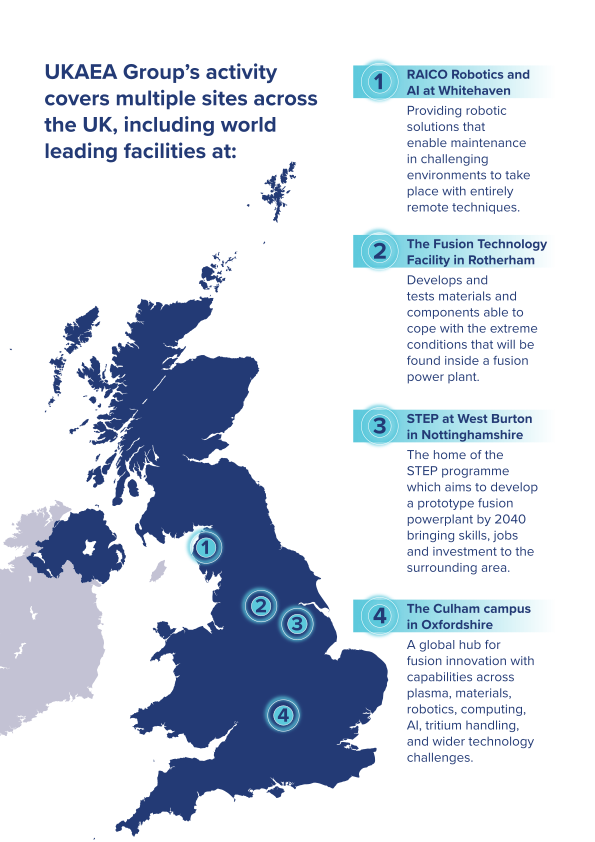 --- Description of figure 4: Map of UK highlighting four UKAEA Group sites. Each numbered location includes a brief description of its focus: RAICO Robotics in Whitehaven (robotic maintenance solutions), Fusion Technology Facility in Rotherham (testing fusion materials), STEP programme in West Burton, Nottinghamshire (prototype fusion powerplant development), and Culham campus in Oxfordshire (fusion innovation hub). --- #### UK Atomic Energy Authority – National Fusion Laboratory UKAEA plays a critical role in developing the technical capability across plasma science, robotics, tritium, computing, AI, materials, and wider technology challenges. This has positioned the UK as a world leader in fusion R&D and the government wants the UKAEA to maintain and build on this position. The UKAEA National Fusion Lab’s role in the Group’s mission is to: > Progress foundational research, technology and innovation in support of the UK fusion sector through world-leading fusion expertise and capability. It does this by operating globally unique research facilities, developing innovation and technologies for fusion and adjacent applications, and partnering with UK and overseas collaborators and industry to develop technical solutions to the challenges of fusion. UKAEA’s existing world-leading facilities include: * MAST-Upgrade (MAST-U): The UK’s national fusion experiment, investigating novel exhaust concepts, de-risk the spherical tokamak design, and extend physics knowledge in support of the broader fusion programme. * Materials Research Facility (MRF): Facility that prepares and examines small samples of materials to assess their suitability for fusion power stations. * Remote Applications in Challenging Environments (RACE): providing robotic solutions that enabling maintenance in challenging environments to take place with entirely remote techniques. * UKAEA South Yorkshire: Facilities develop and test materials and components able to cope with the extreme conditions that will be found inside a fusion power plant. * UKAEA-Eni Hydrogen-3 Advanced Technology (H3AT): a world-first tritium research centre, delivered in collaboration with Eni, studying how to process, store and recycle tritium, one of the fuels that will supply fusion power stations in the future. UKAEA will add to these including through the development of the LIBRTI tritium breeding facility, Sunrise AI facility and Culham AI Growth Zone. Figure 5 – UKAEA’s Culham campus with other UKAEA Group sites and facilities 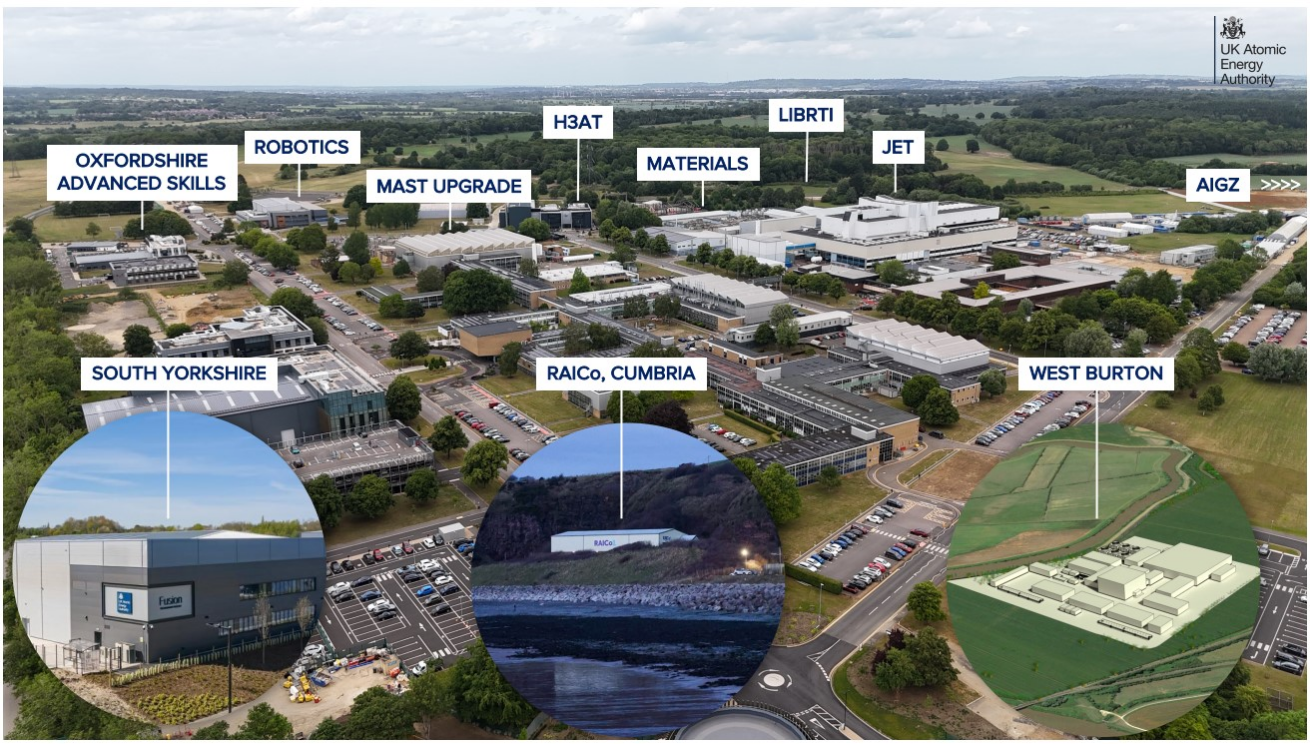 --- Description of figure 5: A labelled aerial photograph showing a UK Atomic Energy Authority Culham site with multiple buildings and facilities identified, including Oxfordshire Advanced Skills, Robotics, Mast Upgrade, H3AT, Materials, LIBRTI, JET, AI Growth Zone. Three inset circular close-ups highlight other UKAEA sites; South Yorkshire, RAICo Cumbria, and West Burton. --- UKAEA will be critical in delivering the UK strategy and building a strong UK fusion industry. Through its expertise and world leading facilities UKAEA will support the UK fusion sector and supply chain to grow through a variety of mechanisms, including through strategic contracts to grow targeted capability and forming Commercial Partnerships, joint ventures, and investible vehicles for IP-driven opportunities. This R&D delivery and support of the UK fusion sector will create economic growth opportunities at the local level. Culham is already a global hub for fusion excellence, bringing companies, investment and jobs into the area and UKAEA has the opportunity to create similar economic growth around sites in Rotherham and Cumbria as well as using on the Oxford-Cambridge Growth Corridor to build on benefits around Culham. UKAEA also acts as the fusion partner for the STEP programme, working with UK Fusion Energy alongside industrial partners, who in turn will bring construction and engineering expertise to STEP. A growing fusion programme and industry brings the opportunity to further benefit local communities, particularly around the site of STEP in West Burton, Nottinghamshire. Figure 6 – DESNZ Secretary of State in front of MAST-U while visiting Culham 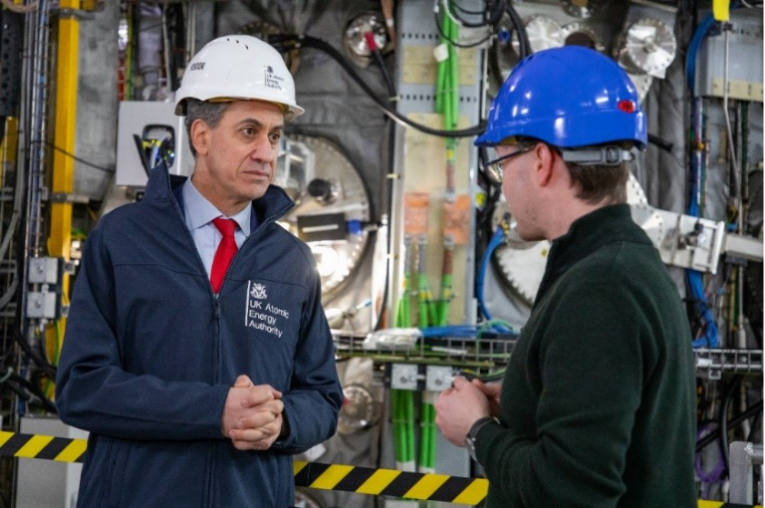 #### UK Industrial Fusion Solutions (UKIFS) – to become UK Fusion Energy UKIFS is uniquely positioned to be a world leading fusion systems integrator and plant operator, bringing together the full set of capabilities, information, and whole plant understanding needed to reach an integrated fusion powerplant design. Its holistic approach - optimising net power, fuel self-sufficiency and a route to commercial levels of plant availability simultaneously – based on leading R&D and industrial integration, gives it a strategic advantage. To reflect the ambition and expectation that government has for the organisation, and its future as a commercially focused organisation in the UK fusion sector, we are announcing as part of this strategy that we will rename UKIFS as UK Fusion Energy. With a budget of £1.3bn up to 2029, UK Fusion Energy is uniquely placed as one of the best capitalised fusion companies in the world, with genuinely leading technical capabilities, the backing of UKAEA’s scientific expertise and the ability to call upon the coordinating power of government. UK Fusion Energy is being developed as a pioneering, major UK company with systems integration and subsystems capability, partnering with private sector construction and engineering companies and able to raise external investment in future. UK Fusion Energy will be a national champion, leading and integrating the capability and know-how to deliver the commercial fusion energy plants of the future, by leading the design, build and operation of STEP and by developing the capacity and capability in the UK supply chain to support and service these activities now and in the future. UK Fusion Energy’s role in the UKAEA Group Mission is to: > Deliver STEP and successive fusion power plants by acting as a national fusion systems integrator and working with industrial partners to develop and deploy the technologies and capabilities required. Through STEP, UK Fusion Energy is building the internal capability, digital information baseline, model-based systems engineering expertise, site knowledge at West Burton and state support required to integrate complex subsystems into an operable plant. UK Fusion Energy will play a critical role in delivering the UK strategy and building a strong UK fusion industry. It will catalyse a wider ecosystem of fusion and supply chain companies able to service STEP and private sector developments but also develop near-term commercial revenue opportunities and supply the wider global fusion sector, beyond the STEP prototype and into future deployment. The delivery of STEP will also give UK Fusion Energy expertise that it can export and Intellectual Property (IP) that it can license into the fusion industry and adjacent sectors whilst playing an essential role in supporting the delivery of new private sector fusion plants. It will do this through genuine partnerships – not simply transactional procurement. UK Fusion Energy will create unique value through: * De-risking a future fleet of fusion powerplants * Developing UK industrial capability and supply chains * Creating long-term economic and sovereign benefit for the UK Figure 7 – The West Burton site before STEP construction 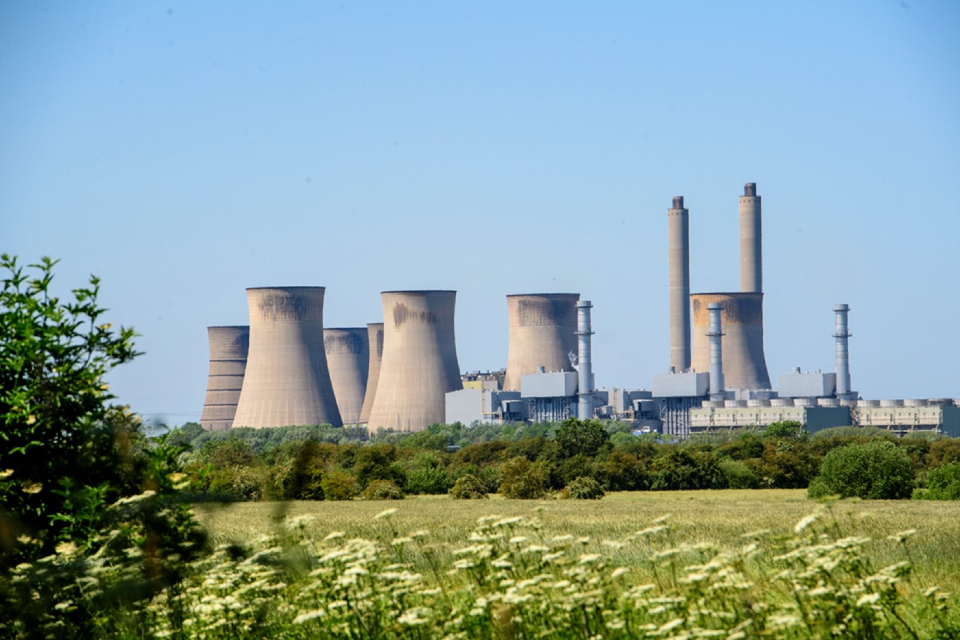 Transforming the site of the former coal-fired West Burton power station into the home of STEP will act as a powerful catalyst for jobs, investment and long-term growth across the East Midlands and wider Trent Valley. By repurposing a site that has powered the UK for generations, UK Fusion Energy will help anchor a thriving clean-energy cluster, attracting high-tech industries and delivering meaningful economic and social impact for local communities. UK Fusion Energy will continue to work closely with the Trent Clean Energy Supercluster[[footnote 12]](#fn:12), East Midlands Combined County Authority (EMCCA) and other local stakeholders as part of this. Whilst no decision has yet been taken on exact timing, UK Fusion Energy’s setup as a limited company provides the government with flexibility over its structure ability to raise its own finance in future and opportunity to develop a commercial culture from the start. As UK Fusion Energy develops, the government will consider the freedoms needed to ensure UK Fusion Energy can operate more fully as a commercially oriented entity which can operate in full partnership with the private sector, including investors, to fulfil its objective to support a world-leading UK fusion sector. UK Fusion Energy’s value will therefore not solely be in delivering STEP but in the ability to deliver a fully integrated fusion powerplant solution, relevant subsystems, and associated knowhow, partnering with industry and playing a key long-term role in the UK fusion sector. ### Accelerating R&D Invest in the underpinning research and technology needed to solve remaining technical challenges, including the world-leading capabilities of UKAEA and partnerships with UK industry. #### Solving technical challenges UKAEA Group plays a crucial role in reducing technical uncertainty to increase market confidence. This requires specific, clear, technical outcomes that demonstrate progress towards fusion commercialisation. The UK will focus on areas of strength that have the biggest impact for the UK economy, putting investment where it is most needed to accelerate development and anchor capability in the UK. To do this, we will turbocharge the UKAEA’s status as a world-class centre of fusion R&D, reinforcing its position as a hub for high-tech innovation, and utilising its position to strategically drive R&D progress. This includes: * Lithium Breeding for Tritium Innovation (LIBRTI) – fusion fuel breeding: A £180m investment through Fusion Futures into LIBRTI, the global first-of-a-kind facility for designing tritium breeding blankets, one of the greatest remaining technical challenges for fusion.[[footnote 13]](#fn:13) * ‘Sunrise’ AI facility – Advanced computation driving fusion R&D: Investing £45m on the ‘Sunrise’ 1.4 MW supercomputer, using advanced AI at to accelerate fusion design, modelling, and operations. * UKAEA-Eni H3AT Tritium Loop Facility – unlocking the full fuel cycle for fusion: A new collaboration between UKAEA and Italian global integrated energy company, Eni, to conduct research and development activities for fusion, beginning with the construction of the Tritium Loop Facility which will be built in collaboration with Canadian electricity lifecycle company, Kinectrics. H3AT will be the UK’s world leading research centre for processing, storing, and recycling tritium for fusion power plants. Table 1 sets out the core deliverables that the government has asked UKAEA Group to deliver alongside their broader activities, to demonstrate credible progress towards fusion energy. Both organisations will report against these deliverables in their annual reports. In addition, the overview in Annex A and technical outcomes in Annex C illustrates the breath of the UK’s fusion R&D programme and how they fit together, which will be further explored in UKAEA and UK Fusion Energy’s organisational strategies. Table 1 – UKAEA core deliverables | Capability | Facilities / Programmes | 2030 core deliverables | UK strategic outcomes | UK capability | How this supports fusion commercialisation | | --- | --- | --- | --- | --- | --- | | Plasma | – MAST-U –STEP | Develop fusion physics knowledge with MAST-U By June 2028 - Complete the fifth and sixth MAST-U experimental campaigns | Derisk STEP technical design and continue to develop IP | A self-sustaining burning plasma configuration for spherical tokamaks | Help enable ‘net gain’ for spherical tokamaks | | Tritium | – LIBRTI – H3AT – STEP – JDR | Commercialise UK-based tritium capability By May 2026 - Commercialise UKAEA-developed Tritium Technology by partnering with industry | Attract investment and establish international leadership in a nascent market | A full tritium fuel cycle and handling capabilities for integration into power plant designs | All fusion power plants will require their own fuel breeding to meet demand for tritium | | Materials | – MRF – LIBRTI – CHIMERA – STEP | Build the globally unique LIBRTI facility By July 2027 – Demonstrate Multiphysics Platform to predict LIBRTI tritium output and By March 2028 - Complete LIBRTI building at Culham to begin installation of neutron source | First mover advantage in fusion fuel breeding technology | A commercially feasible fuel breeder design Materials able to withstand fusion conditions on timescales that enables feasible operation of fusion power plants | New materials are required to enable commercial viability of fusion by decreasing maintenance times | | Robotics | – RACE – RAICO – STEP | Commercialise UK-based robotics capability By December 2027 - Commercialise UKAEA developed robotics capabilities for application into global fission, fusion, clean energy and other technology markets | Attract investment and establish international leadership in a nascent market | A suite of robotic solutions that enable maintenance and decommissioning of fusion reactors | Remote maintenance is needed for fusion due to the extreme environment | | Fusion Integration, Engineering, and Deployment | – STEP | Technology Development By Summer 2028 – UK Fusion Energy will have completed magnet and gyrotron test facility construction at West Burton | Demonstrate technical risk reduction increasing the investment potential of UK Fusion Energy and develop valuable test bed capability that can be commercially exploited | A holistic detailed powerplant design | A fusion powerplant design will be developed that can be exported and deployed around the world | #### Advancing AI for fusion Huge strides in artificial intelligence (AI) have been made since the publication of the UK’s first fusion strategy. The government’s ‘AI for Science Strategy’ sets out how the UK will maintain its global scientific leadership and shape the transformation of science by AI. Our vision is centred around building a data landscape that facilitates transformative research; ensuring researchers have access to compute resource at sufficient scale; building multi-disciplinary research communities; and capitalising on rapid developments in autonomous laboratory infrastructure and general-purpose AI science tools.[[footnote 14]](#fn:14) Fusion is one of the 5 priority areas identified on the basis of existing UK strength, opportunities for AI-driven progress, and alignment with wider UK objectives including the UK’s modern Industrial Strategy, within which Fusion and AI are both frontier industries.[[footnote 15]](#fn:15) Whilst fusion could play a significant role in powering the AI datacentres of the future, AI will first play a key role in making fusion happen. AI applications for fusion energy, including through international AI research partnerships, can accelerate progress towards commercialised fusion energy. The government’s AI Opportunities Action Plan announced the UKAEA’s Culham Campus as the UK’s first AI Growth Zone (AIGZ).[[footnote 16]](#fn:16) This presents a unique opportunity to bring together world-leading scientific expertise and build a hub that will cement the UK’s position at the forefront of fusion delivery. UKAEA Group will work with DESNZ, Department for Science, Innovation and Technology (DSIT) and UK Research and Innovation (UKRI) to maximise the benefits of the AIGZ for both fusion and wider UK science. This work also aligns with the government’s forthcoming AI for Clean Energy Strategy, due to be published in Autumn 2026, which will set out a coherent framework for how AI can be deployed across the energy system to support decarbonisation, security and economic growth. Advances in AI for fusion provide an early example of how targeted investment in AI can accelerate clean energy innovation while strengthening the UK’s long-term energy resilience. Building on this, the government is investing £45m into Sunrise, a 1.4 MW supercomputer dedicated towards utilising AI for fusion energy. Sunrise will be a focused, mission-driven AI/HPC system accelerating the work of the UK’s world-leading fusion scientists and work with other UK AI clusters such as Isambard-AI and Dawn. By June 2026, UKAEA will begin operations of Sunrise, expected to be the most powerful fusion-dedicated AI supercomputer in the world, whilst continuing to develop the AI Growth Zone at the Culham Campus. UKRI will engage on opportunities to exploit sovereign AI capability including fusion and net zero at the AIGZ in Culham. The work of Sunrise is likely to include both AI for discovery, where computing power can be turned to uncovering new knowledge, structures, or design options; and AI for automation, where AI is tasked to perform existing tasks faster, cheaper, more safely, and at a larger scale than is possible without it. In practice, this means: * Accelerating simulation, surrogates and design – where AI could simplify simulations or learn the behaviour of complex systems such as plasmas to turn simulations that might take weeks or months into mere minutes or hours work * Boosting data management, and the ‘digital thread’ – Making UKAEA’s fusion research and experimental data consistent, accessible, and electronically readable. With this overhaul, AI can shortlist the most promising options to explore further, making fusion research much quicker. * Enhancing experimental operations and control in real-time diagnostics – In this field, AI can be trained to spot anomalies and flag any issues. * Supporting plant operations, maintenance and robotics by monitoring for risks in real time, pre-empting maintenance requirements, and manage physical robots to improve safety and keep people out of hazardous areas. * Progressing materials design, where AI could rapidly screen ‘candidate materials’ for use in reactors, highlighting those most promising for use in extreme environments. * Aiding plant managers with energy use – plotting the best times to draw from the grid for cheap power. Our goal is to prepare fusion data for AI applications to ensure that researchers from both SMEs and academic institutions can access data, supporting greater collaboration and engagement with industry partners. Case study: AI-accelerated plasma turbulence models Artificial intelligence is transforming fusion research by enabling ultra-fast ‘surrogate models’ of turbulent plasma. High-fidelity ‘gyrokinetic’ simulations are the gold standard but runs can take days or even weeks on a supercomputer. To break this bottleneck, we are working with AI specialists at JKU Linz and Emmi AI, using state-of-the-art vision transformers, to build the world’s first 5D, and crucially ‘non-linear’ gyrokinetic surrogate model GyroSwin.[[footnote 17]](#fn:17) Vision transformers are a form of AI originally developed for analysing complex images and video, where they excel at spotting subtle patterns. Here, we apply the same idea to plasma simulations. Large sets of simulations are generated to provide the required training data. Then, rather than directly fitting turbulent heat and particle fluxes, the AI is trained to predict step-by-step the full 5D plasma. Once trained, these surrogates can accurately reproduce the underlying simulations in a matter of seconds. This makes it possible to rapidly test candidate tokamak designs, explore operating scenarios at scale, and embed turbulence physics into whole-device and system codes, helping to increase plasma performance and reducing risk for future devices. Figure 8 – Picture showing a fusion plasma simulation embedded into a fusion tokamak - Image credit: UKAEA 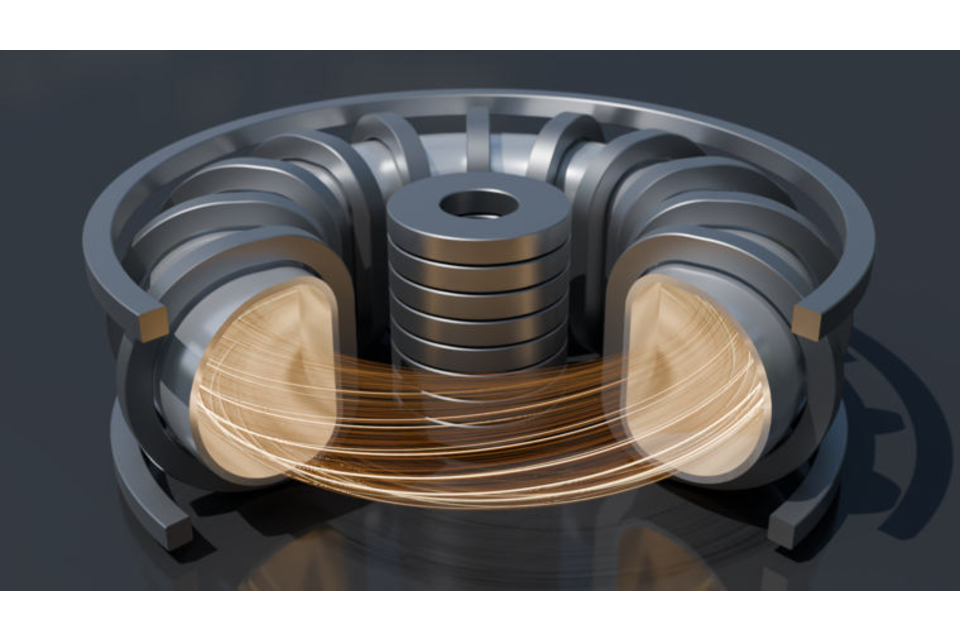 #### Driving Innovation and spin-out opportunities UKAEA has a key role in supporting innovation and the growth of the UK fusion industry in its broadest sense. Over the last 3 years UKAEA has made considerable progress in developing an innovation and commercialisation culture. This includes: * Creating a dedicated Innovation team to work hand in hand with the technical experts to identify, develop and complete commercialisation * Providing proof of concept funding which allows the fast-paced development of these technologies and understanding of markets * Creating a wide network across other sectors to allow fast paced market discovery and routes to adoption of fusion technologies into other sectors * Establishing commercialisation events to exhibit potential fusion spin-out companies to investors and potential industrial partners * Championing entrepreneurship with training within UKAEA in partnership with Innovate UK[[footnote 18]](#fn:18) * Offering access to a growing portfolio of fusion-derived intellectual property, ready to be adopted, adapted, and scaled by industry partners UKAEA will continue to strengthen a culture of innovation and transfer of their capability into commercial vehicles that can support the entire fusion ecosystem with the greater freedom and flexibility that the private sector can deliver. ##### UK Research and Innovation (UKRI) programmes UKRI is the UK’s national funding agency for research and innovation. It brings together 7 research councils, Innovate UK, and Research England to support science, technology, and industrial innovation. UKRI provides funding, infrastructure, and collaborative platforms to support critical technology development that strengthens the UK’s position in global research. The Engineering and Physical Sciences Research Council (EPSRC) plays an important role in supporting UKAEA R&D activities providing £77m from 2022 - 2027 in peer reviewed research grants to scientists using UKAEA capabilities and assets.[[footnote 19]](#fn:19) This is a critical role that ensures the highest quality, science driven research continues to provide a pipeline of innovation and cutting-edge technology. UKRI also provides an important role in bringing industry and academia together such as: * Tokamak Energy and the University of Birmingham to advance fusion shielding systems * First Light Fusion, Imperial College London, the University of York, and the University of Oxford to apply novel AI techniques to inertial fusion approaches UKRI will continue support for science exploration of UK fusion as a frontier industry of the Industrial Strategy’s Clean Energy Industries Sector Plan Case study: UPLiFT The UK Programme of Laser Inertial Fusion Technology for Energy (UPLiFT) is led by the Central Laser Facility (CLF) within the Science and Technology Facilities Council (STFC), in collaboration with universities, and funded by DESNZ. The project is driving advances in high-energy laser and target technologies for laser driven Inertial Fusion Energy (IFE), including advanced laser systems, target injection, cryogenics, and power plant concepts. Producing these targets is exceptionally difficult: they must be perfectly spherical with mirror smooth surfaces. Producing these targets in the required quantities also remains a significant challenge. UPLiFT is strengthening the UK’s capabilities by training more researchers in fusion targetry and investing in state of the art manufacturing technologies, positioning the UK as a global leader in this field. With ultra high-resolution 3D printing, CLF can now fabricate fuel shells faster, with greater reliability and reduced complexity. This innovation shortens research and development cycles and lowers the overall cost of IFE studies. Figure 9 – Ultra high-resolution 3D printed target capsules produced using 2 photon polymerisation (2PP) technology. 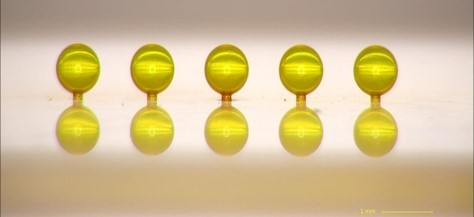 ### Growing investment, supply chains and skills Use public investment, including through STEP, to unlock private sector investment and stimulate a rich ecosystem of companies working in fusion, from SMEs to multinationals, supported by a pipeline of skills, making the UK a top global destination for private developers, suppliers and investment. The global fusion sector has already raised nearly $10bn in private capital and while that figure is rapidly increasing year-on-year, power plant development will be capital intensive, and substantially more finance and wider support will be needed to nurture and attract companies, create a robust supply chain, and support deployment in the UK and around the world.[[footnote 20]](#fn:20) As fusion development accelerates there will be increasingly significant opportunities for private investment in the fusion industry. In the near term, fusion-related companies are already generating technologies with revenue streams, providing the opportunity for investment in innovation and in the fusion supply chain as these technologies are commercialised in adjacent sectors. More widely, we are starting to see the first examples of private offtake agreements as major investors wake up to the huge potential of fusion energy. As we move towards deployment, there will be greater opportunities for both energy companies and wider investors to be involved in fusion deployment at scale and the supporting supply chain. The UK government has demonstrated that it is committed to exploring alternative ways to unlock investment into infrastructure. Recent initiatives such as the Mansion House Accord and Sterling 20 will unlock up to £50bn in investment from pension funds.[[footnote 21]](#fn:21) UK Fusion Energy itself has secured significant public sector funding for the next stage of the STEP programme which will increase investment into the UK supply chain. However, over time UK Fusion Energy will also aim to secure private investment into the organisation to accelerate delivery and serve as a catalyst for driving talent and private capital into the UK fusion sector. Progressing the STEP Programme will retire technical risk and prove the commercial value of specific technologies, as well as generating valuable IP in systems integration and subsystems that UK Fusion Energy will look to exploit commercially for economic growth. Figure 10 – STEP benefits to January 2026 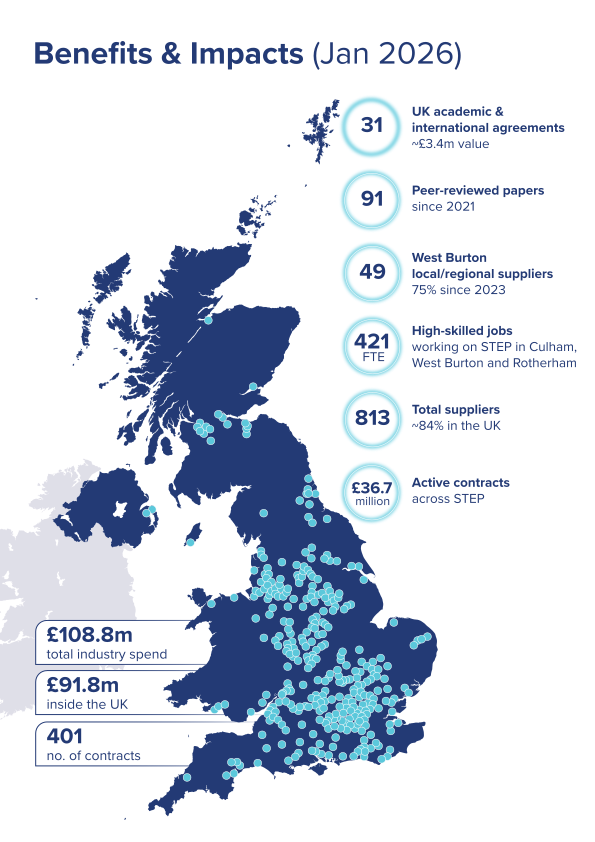 --- Description of figure 10: A map of the UK showing the benefits of the STEP fusion programme to January 2026. This shows a vast number of locations of collaboration across the UK and highlights: £108.8 million total industry spend, £91.8 million inside the UK, 401 contracts, 31 UK academic & international agreements, 91 peer-reviewed papers since 2021, 49 West Burton local/regional suppliers, 421 FTE high-skilled jobs, 813 total suppliers, £36.7 million Active contracts across STEP. --- #### Creating Demand Signals For the fusion supply chain to scale up, suppliers need to have confidence in future demand. While fusion companies spent $434 million on supply chain in 2024, nearly double the previous year, and anticipate a further 25% increase in 2025, 81% of suppliers still cite uncertainty as a major barrier.[[footnote 22]](#fn:22) This risk aversion is compounded by the perception of fusion as a high-risk, long-term market. STEP, alongside private sector deployment, will be a significant source of demand, stimulating the development of the wider sector including private sector deployment. UK Fusion Energy will directly provide revenue opportunities for companies in the UK fusion supply chain through contracts to deliver STEP, which will be worth hundreds of millions of pounds over the next few years and provide significant opportunity to develop key capabilities. The ecosystem developed around STEP will also support private development in the UK and demand from adjacent sectors for fusion spinout technology. ##### Spherical Tokamak for Energy Production (STEP): STEP will create thousands of jobs, supporting redevelopment of the UK’s industrial heartlands around its site in West Burton, Nottinghamshire - formerly home to a coal power plant. STEP will be an anchor for regional growth in the longer term by catalysing development of a fusion cluster in the region including through a business park on site and ties to the wider Trent Clean Energy Supercluster work in the region. To catalyse the wider fusion sector, STEP will involve integration of industry to utilise its capability and capacity. This has the dual benefit of maximising the chances of success of the programme, by integrating private engineering and construction expertise with public R&D expertise, whilst directly stimulating development of the private fusion sector. Finally, STEP is engaging with UK regulators to ensure alignment between the needs for fusion power plant deployment and regulation whilst upskilling the regulators on fusion technology. The UK government also sees STEP having an important role in easing the way for future power plants by itself going through the UK regulatory and planning process. As part of the government’s significant investment in fusion until 2030, STEP will demonstrate tangible progress towards fusion commercialisation and economic benefits for the UK through jobs, developing skills and developing technology in adjacent sectors. Key deliverables include: * Establish an integrated delivery team: By April 2026 UK Fusion Energy will have selected and contracted for a long-term Construction Partner, ensuring STEP has the capability and capacity to be successful and bringing the UK private sector supply chain into the fusion industry. The Construction Partner, working alongside the existing UKAEA Fusion Partner, will be fully integrated into the STEP delivery team by October 2026. * Technology Development: By Summer 2028 UK Fusion Energy, in partnership with its Fusion and Construction Partners and local authorities, will have completed magnet and gyrotron test facility construction on West Burton site and the surrounding region. * Build a UK fusion industry: By Spring 2028 UK Fusion Energy will have agreed strategic relationships with critical suppliers of fusion technologies, establishing long-term access to capability, capacity and specialist sub-systems and components essential for STEP and wider fusion commercialisation. * Redevelop the site of a former coal fired power plant: By March 2029 UK Fusion Energy will have submitted the Development Consent Order (DCO) for STEP Fusion, demonstrating it has met all required planning, environmental, and regulatory standards required of nationally significant infrastructure. This will pave the way for government DCO approval and UK Fusion Energy commencement of main plant construction and other key activities to achieve STEP #### Creating Regional Incentives Tax credits are widely used globally to incentivise investment into key industries and fusion is already eligible for the UK’s national R&D tax credit offer of 20%. However, we want to do more to ensure that the UK’s offer to fusion investors and companies is world leading. As part of the UK’s Industrial Strategy, the UK government launched the Industrial Strategy Zones Action Plan to bring together the UK’s Freeports and Investment Zones programmes under a shared identity – Industrial Strategy Zones, and to accelerate their delivery through enhanced government support. Industrial Strategy Zones exist in 22 places across the UK and include a range of different incentives to attract investment and develop city regions and clusters. They all aim to deliver sector growth through 3 stages of development: 1. Creating investible sites and places: bringing sites, facilities and infrastructure forward, ready for investors; 2. Landing investment and supporting local businesses to invest: promoting Industrial Strategy Zones, working with businesses to secure investment and support their growth; 3. Growing clusters and supporting local economic growth: capitalising on early investment to attract a wider supply chain and foster a cluster, while reinvesting in the local economy and communities. The UK already has a world leading cluster for fusion energy development at Culham. We will explore opportunities at West Burton and the Trent Valley to strengthen our second cluster for fusion commercialisation and deployment in the East Midlands. These sites provide the ideal location to expand our second fusion cluster with an existing local skills base, workforce and grid connections. The UK government will explore further incentives to attract more fusion investment to support the East Midlands fusion cluster. Figure 11 – Impact and benefits of STEP fusion 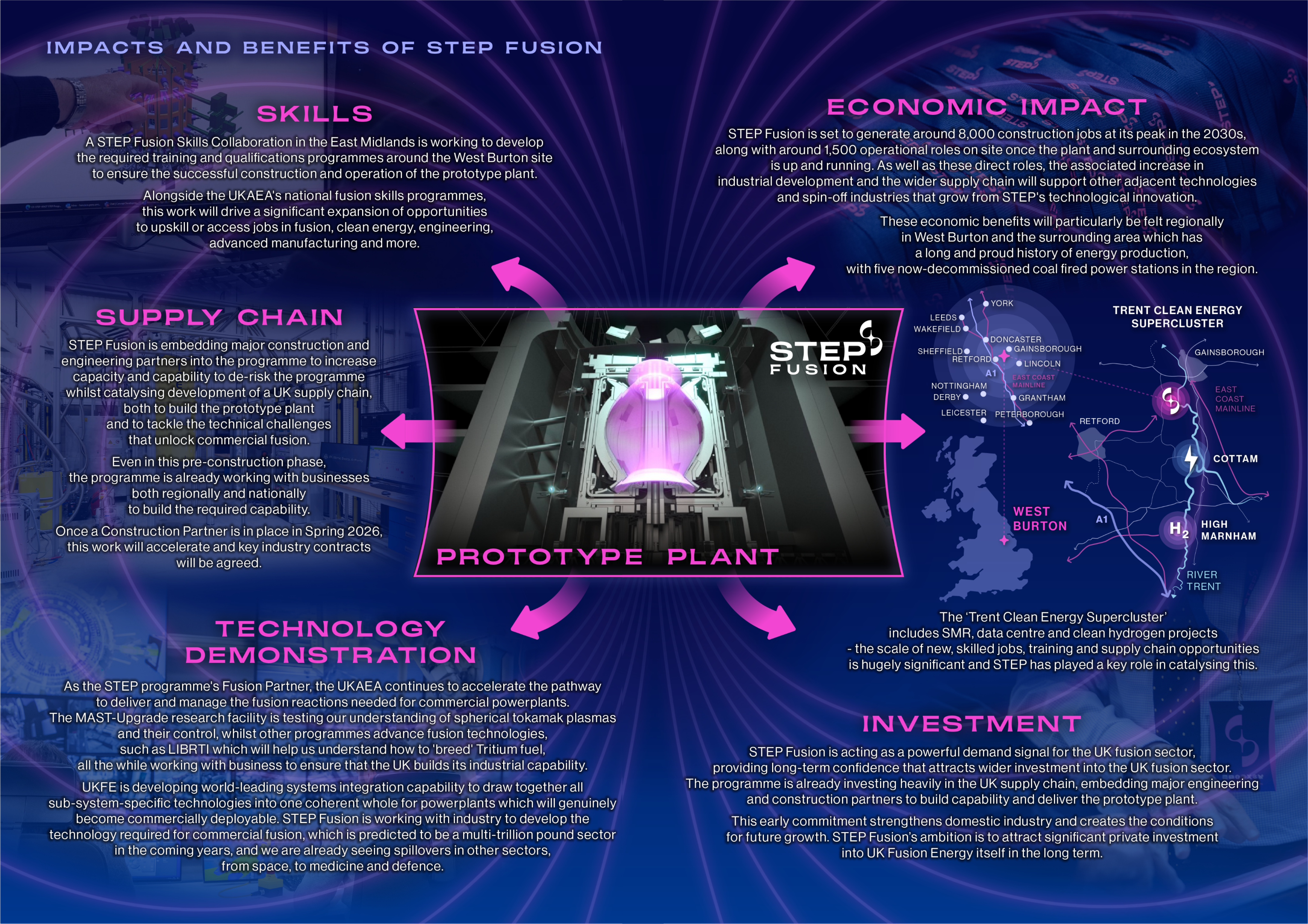 --- Description of figure 11: Infographic diagram illustrating impacts and benefits of Step Fusion, focusing on skills development, supply chain, technology demonstration, economic impact, and investment related to a prototype plant. Key elements include a central plant image, color-coded sections with detailed text, a map highlighting West Burton and Trent Clean Energy Hub, and arrows connecting topics, emphasizing job creation, innovation, and regional energy transition milestones. Text in the graphic is as follows: Skills: A STEP Fusion Skills Collaboration in the East Midlands is working to develop the required training and qualifications programmes around the West Burton site to ensure the successful construction and operation of the prototype plant. Alongside the UKAEA’s national fusion skills programmes, this work will drive a significant expansion of opportunities to upskill or access jobs in fusion, clean energy, engineering, advanced manufacturing and more Supply chain: STEP Fusion is embedding major construction and engineering businesses into the programme to develop key capabilities and build a UK supply chain, both to build the prototype plant and to tackle the technical challenges that unlock commercial fusion. Even in this pre-construction phase, the programme is already working with businesses both regionally and nationally to build the required capability. Once a Construction Partner is in place in Spring 2026, this work will accelerate and key industry contracts will be agreed. Technology demonstration: As the STEP programme’s Fusion Partner, the UKAEA continues to accelerate the pathway to deliver and manage the fusion reactions needed for commercial powerplants. The MAST-Upgrade research facility is testing our understanding of spherical tokamak plasmas and their control, whilst other programmes advance fusion technologies, such as LIBRTI which will help us understand how to ‘breed’ Tritium fuel, all the while working with business to ensure that the UK builds its industrial capability. UKIFS is also developing systems integration capability, ensuring that regardless of which fusion technology emerges, the UK can benefit economically by servicing a global market through a strong supply chain. STEP Fusion is working with industry to develop the technology required for commercial fusion, which is predicted to be a multi-trillion pound sector in the coming years, and we are already seeing spillovers in other sectors, from space, to medicine and defence. Economic impact: STEP Fusion is set to generate around 8,000 construction jobs at its peak in the 2030s, along with around 1,500 operational roles on site once the plant and surrounding ecosystem is up and running. As well as these direct roles, the associated increase in industrial development and the wider supply chain will support other adjacent technologies and spin-off industries that grow from STEP’s technological innovation. These economic benefits will particularly be felt regionally - West Burton and the surrounding area has a long and proud history of energy production, with five now-decommissioned coal fired power stations in the region. When considered in the context of the wider ‘Trent Clean Energy Supercluster’ in the region - which also includes SMR, data centre and clean hydrogen projects - the scale of new, skilled jobs, training, and supply chain opportunities and the infrastructure investment involved in the STEP programme is hugely significant. Investment: STEP is acting as a powerful demand signal for the UK fusion sector, providing long-term confidence that attracts wider investment into the UK fusion sector. The programme is already investing heavily in the UK supply chain, embedding major engineering and construction partners to build capability and deliver the prototype plant. This early commitment strengthens domestic industry and creates the conditions for future growth. STEP Fusion’s ambition is to attract significant private investment into UK Industrial